Related links
 Homepage
 User documentation
 Uživatelská dokumentace
Framework Core functionality
- AyMINE Framework Server
- The AyMINE licence model
- FRM Module Releases
- Configuration of the user-defined fields
- Client-Defined attributes
- Server scripting & Automation
- Strings and translations
- User sessions
- Import collection of objects
- Multi tenant Architecture
- Export collection of objects
- System messaging
- System Rights
- File Management with End-to-End Encryption
- Server configuration for large files
SOA / Event Management
Support for Service Object Architecture and Internal Event ManagementModule - support for management
Front-End Scripting
System Management
- SaaS Management Module
- System Module Release Overiew
- Management of the SaaS service client
- Encryted wallet storing access keys for data vault
- Definition and Management users in the SaaS system
- Management of the system users
- System right management
- System role is how user administrator sets the rights
- File access, storing and locking
- Communication geateways
- Private Object Marks, Sign & Notes
Task Management Module
- About TSK module
- Support for voting and decision management
- Support and implementation notes for FMEA
- Support for the Methodology Management
- Project Methodology Support
- Project Roles - Data model and implementation notes
- Actions and Meeting Agenda
- Description of person and supplier competencies
- Business event
- Problem & Helpdesk management support
- TSK Module releases
- User Reminder
Task & Task pattern
Mobile & Web Application
- Client-Side Scripting using API
- Application Object Structure
- Clipborad Link - Cliplink
- fclip
- drag-drop
- AyMINE Application
- objectdefinition_inlineedit
- clientprogramming
- mobileapplication
- languagesupport
- objectdefinition_multiupdate
- Object API – object <g>
- clientprogramming_fevallanguage
- clientprogramming_fevaluser
- objectdefinition_viewdefinition
- offlineobjects
- System console
- Runtime debugging
- objectdefinition_detailview
CMS - Content Management & Web API services
FI - Finance Management
CRM Module Customer-Relationship Management technical & implementation notes
Sales & Asset management
Sales related services
Description of a part of the AM module - sales part Asset Inventory
Inventory process is crucial operation of the asset control
- Inventory – Application model
- Set up the inventory team
- Change of the inventoried asset state
- ER Data Model
The inventory is joined with the stock but the process is general and serves to any set of assets regardless if they are in the physical stock or not.
The inventory process operates for:
- Physical assets located anywhere in the company
- Non-physical assets like liabilities, stocks, obligations etc.
- Reserves of any kind – physical as well as financial
Inventory – Application model
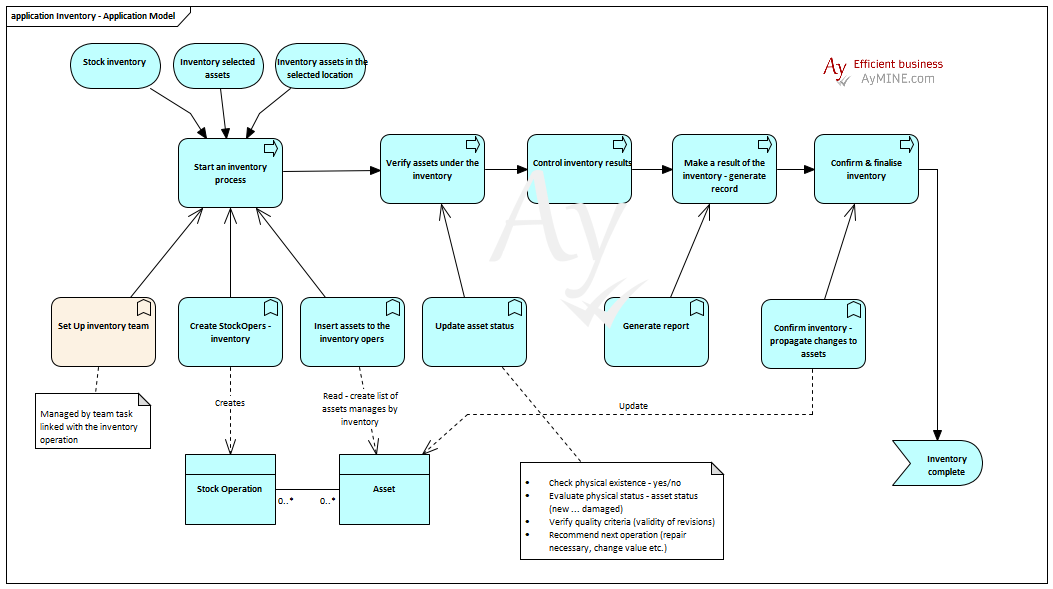
The following diagram describes steps and operations that implements the inventory:
Set up the inventory team
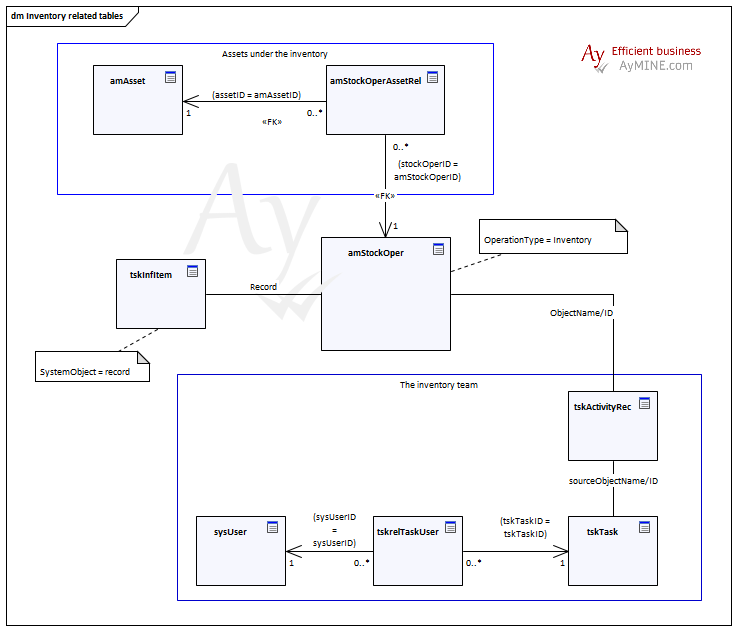
Inventory is linked with task that has defined the inventory team. The inventory team is defined by the linked team. Team generated to the operation record is defined by the task as well.
Change of the inventoried asset state
Control of the inventoried assets support change of the state:
• Check the physical existence of the asset (mark – yes/no)
• Evaluate physical status – asset status (new ... damaged – counter values)
• Verify the quality criteria (validity of revisions) – optionally updated directly to assets (if the inventory team has appropriate rights)
• Recommended operations (repair necessary, change value etc.)
ER Data Model
Data model related with the inventory: