Related links
 Homepage
 User documentation
 Uživatelská dokumentace
Framework Core functionality
- AyMINE Framework Server
- The AyMINE licence model
- FRM Module Releases
- Configuration of the user-defined fields
- Client-Defined attributes
- Server scripting & Automation
- Strings and translations
- User sessions
- Import collection of objects
- Multi tenant Architecture
- Export collection of objects
- System messaging
- System Rights
- File Management with End-to-End Encryption
- Server configuration for large files
SOA / Event Management
Support for Service Object Architecture and Internal Event ManagementModule - support for management
Front-End Scripting
System Management
- SaaS Management Module
- System Module Release Overiew
- Management of the SaaS service client
- Encryted wallet storing access keys for data vault
- Definition and Management users in the SaaS system
- Management of the system users
- System right management
- System role is how user administrator sets the rights
- File access, storing and locking
- Communication geateways
- Private Object Marks, Sign & Notes
Task Management Module
- About TSK module
- Support for voting and decision management
- Support and implementation notes for FMEA
- Support for the Methodology Management
- Project Methodology Support
- Project Roles - Data model and implementation notes
- Actions and Meeting Agenda
- Description of person and supplier competencies
- Business event
- Problem & Helpdesk management support
- TSK Module releases
- User Reminder
Task & Task pattern
Mobile & Web Application
- Client-Side Scripting using API
- Application Object Structure
- Clipborad Link - Cliplink
- fclip
- drag-drop
- AyMINE Application
- objectdefinition_inlineedit
- clientprogramming
- mobileapplication
- languagesupport
- objectdefinition_multiupdate
- Object API – object <g>
- clientprogramming_fevallanguage
- clientprogramming_fevaluser
- objectdefinition_viewdefinition
- offlineobjects
- System console
- Runtime debugging
- objectdefinition_detailview
CMS - Content Management & Web API services
FI - Finance Management
CRM Module Customer-Relationship Management technical & implementation notes
Sales & Asset management
Sales related services
Description of a part of the AM module - sales partApplication object structure
AyMINE - PWA Application
AyMINE client-side is 100% PWA application that has agnostic internal structure. PWA is almost independent engine supporting several views like dashboard, detail and others that are universal. Their usage is defined by the modules and their objects. Each object implements its own view using universal views.
Principal view objects
The following UML structure Class model describes internal implementation of the user interface generators and managers (you can click on pictures to get larger detail):
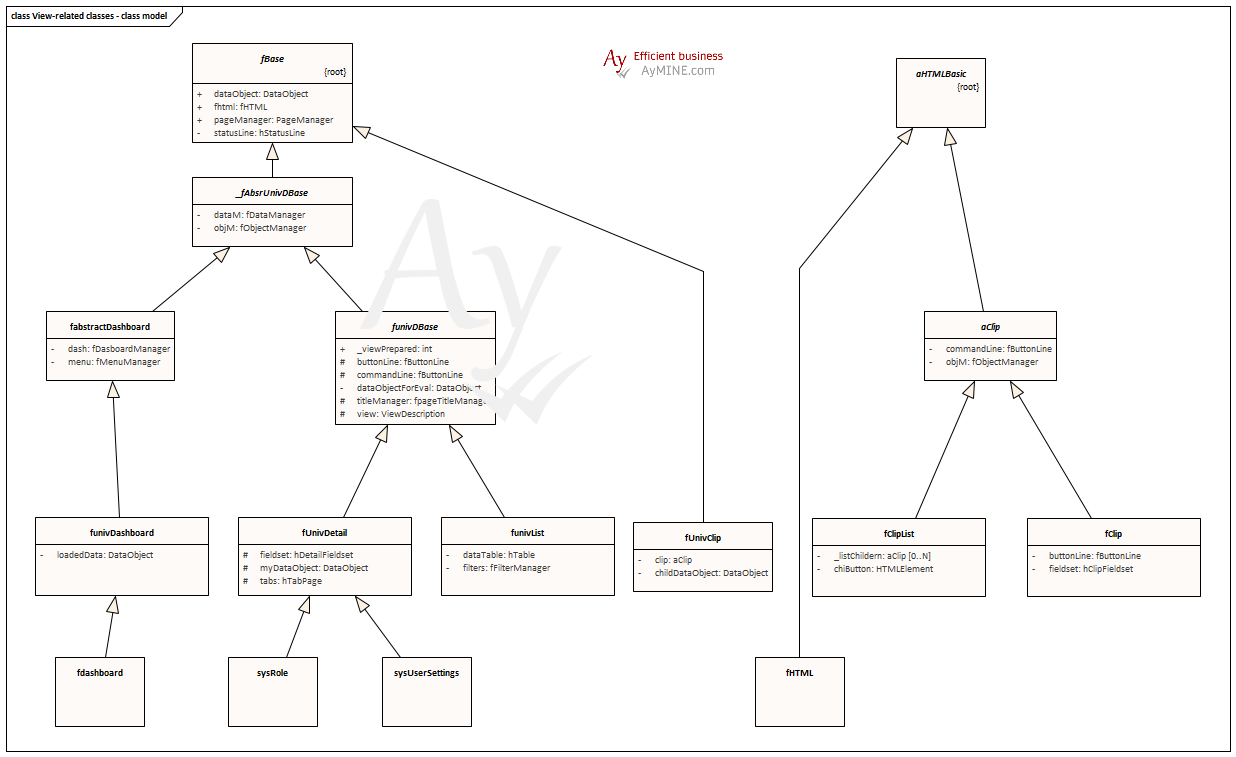
Class fBase
Basic class for all window managers. Manages loading and general single-page view. It as an abstract ancestor for all windows. As an abstract it never have instance – there is no possibility to activate it.
fBase implements most of the functions for client-side scripting API (object window).
funivDashboard – Dashboard implementation
General implementation of the dashboards. Manages the content of the dashboard including
- Top menu
- Dashboard items:
- Dashboard buttons
- Dashboard content
Dashboards implements all type of dashboards in AyMINE – including the principal dashboard
fUnivDetail – Detail implementation
Implementation of all single-object detail view. Internally uses managers for principal visual objects:
- Tabs
- Boxes
- Content of the boxes in the set of fields (internal object
fieldset)
Let's note that single “fieldset” is used for all attributes in all boxes
funivList – List of object
Implementation of list of objects based on the table / tree structure. Apart of the table, it also manages operations with selected boxes and filters applied on the list. Filters are encapsulated to the filter manager class
fClip – single object short representation
Short view of a single detail is presented by clip. fClip manages everything necessary to display a clip.
Clip supports subordinated clips and so it is a principal object of both single clip and tree of clip views.
fClipList – List of clips
Any list of clips is managed by this class. It manages list as well as operations (mostly inserting new) and filters. Filters uses the same filter manager as list based on the table view.
Principal supporting classes
The principal classes are based on
- Manager of interface elements
- Key interfaces between
- View managers and browser interface
- “JSONC” class-definitions:
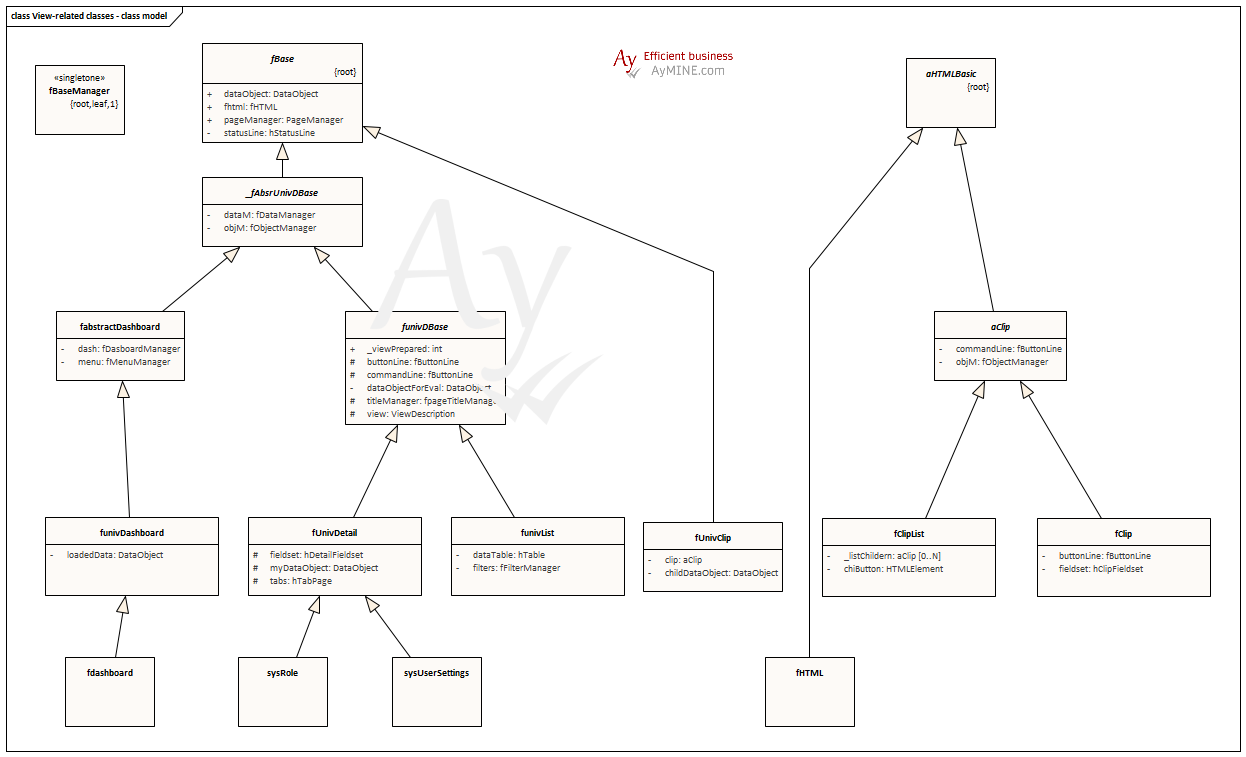
Internal object structure managers
fBaseManger
Register of all fbase classes – both those that have its own window as well as those, that are included in another detail and does not have own view