Related links
 Homepage
 User documentation
 Uživatelská dokumentace
Framework Core functionality
- AyMINE Framework Server
- The AyMINE licence model
- FRM Module Releases
- Configuration of the user-defined fields
- Client-Defined attributes
- Server scripting & Automation
- Strings and translations
- User sessions
- Import collection of objects
- Multi tenant Architecture
- Export collection of objects
- System messaging
- System Rights
- File Management with End-to-End Encryption
- Server configuration for large files
SOA / Event Management
Support for Service Object Architecture and Internal Event ManagementModule - support for management
Front-End Scripting
System Management
- SaaS Management Module
- System Module Release Overiew
- Management of the SaaS service client
- Encryted wallet storing access keys for data vault
- Definition and Management users in the SaaS system
- Management of the system users
- System right management
- System role is how user administrator sets the rights
- File access, storing and locking
- Communication geateways
- Private Object Marks, Sign & Notes
Task Management Module
- About TSK module
- Support for voting and decision management
- Support and implementation notes for FMEA
- Support for the Methodology Management
- Project Methodology Support
- Project Roles - Data model and implementation notes
- Actions and Meeting Agenda
- Description of person and supplier competencies
- Business event
- Problem & Helpdesk management support
- TSK Module releases
- User Reminder
Task & Task pattern
Mobile & Web Application
- Client-Side Scripting using API
- Application Object Structure
- Clipborad Link - Cliplink
- fclip
- drag-drop
- AyMINE Application
- objectdefinition_inlineedit
- clientprogramming
- mobileapplication
- languagesupport
- objectdefinition_multiupdate
- Object API – object <g>
- clientprogramming_fevallanguage
- clientprogramming_fevaluser
- objectdefinition_viewdefinition
- offlineobjects
- System console
- Runtime debugging
- objectdefinition_detailview
CMS - Content Management & Web API services
FI - Finance Management
CRM Module Customer-Relationship Management technical & implementation notes
Sales & Asset management
Sales related services
Description of a part of the AM module - sales partProcess New Order from Email
AyMINE supports receiving and processing orders from incoming emails. It handles both requests from email body as well as from the PDF attachment.
Order recognition
Orders are automatically recognised only from customers that are already stored in the CRM system.
Customer description
Customer should have defined:
- At least single address with domain. Orders are accepted only from client's domain email addresses.
- Pattern for message subject and message body. Key words and structure works well for automatically generated emails as well as for emails that are created manually from some template
- Pattern to recognise customer order number. It helps check for duplicities.
- Optionally also name of the parsing method, that is more precise than universal method based on the AI.
All fields are stored in the customer detail, available in the CRM company detail, but visible only for administrators.
Email selection process
Incoming emails is processed by several steps:
- Rule detecting spams. They are blocked for emails from knows authors – therefore storing not only company but also responsible personnels makes control easier.
- Rule assigning responsibility. Rules uses settings in the CRM groups: responsible person shall have responsibility for the ordering process defined in the CRM customer group in which the customer is placed.
- Makes controls of the content according to the rules described formerly.
- Checking structure of data if they are valid
Processing incoming email is described in the following process:
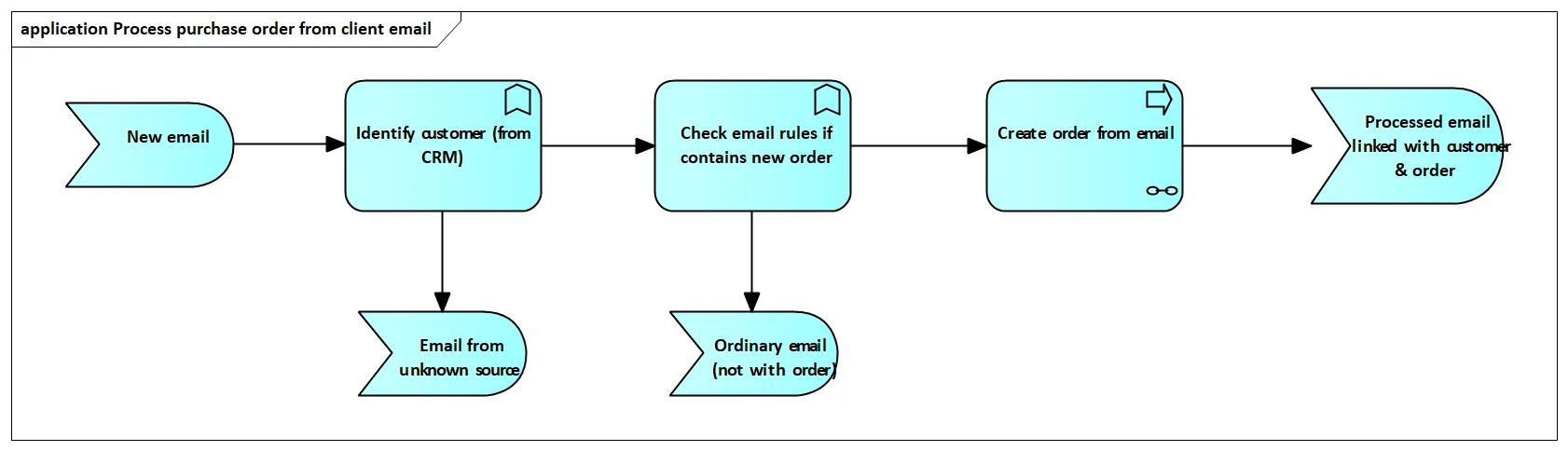
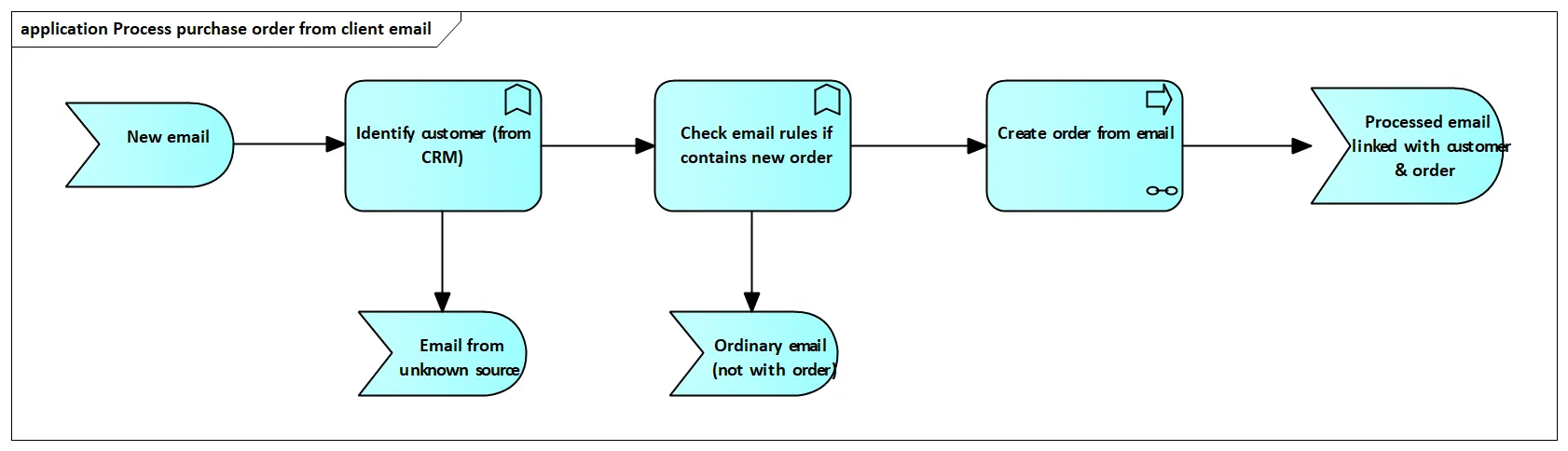
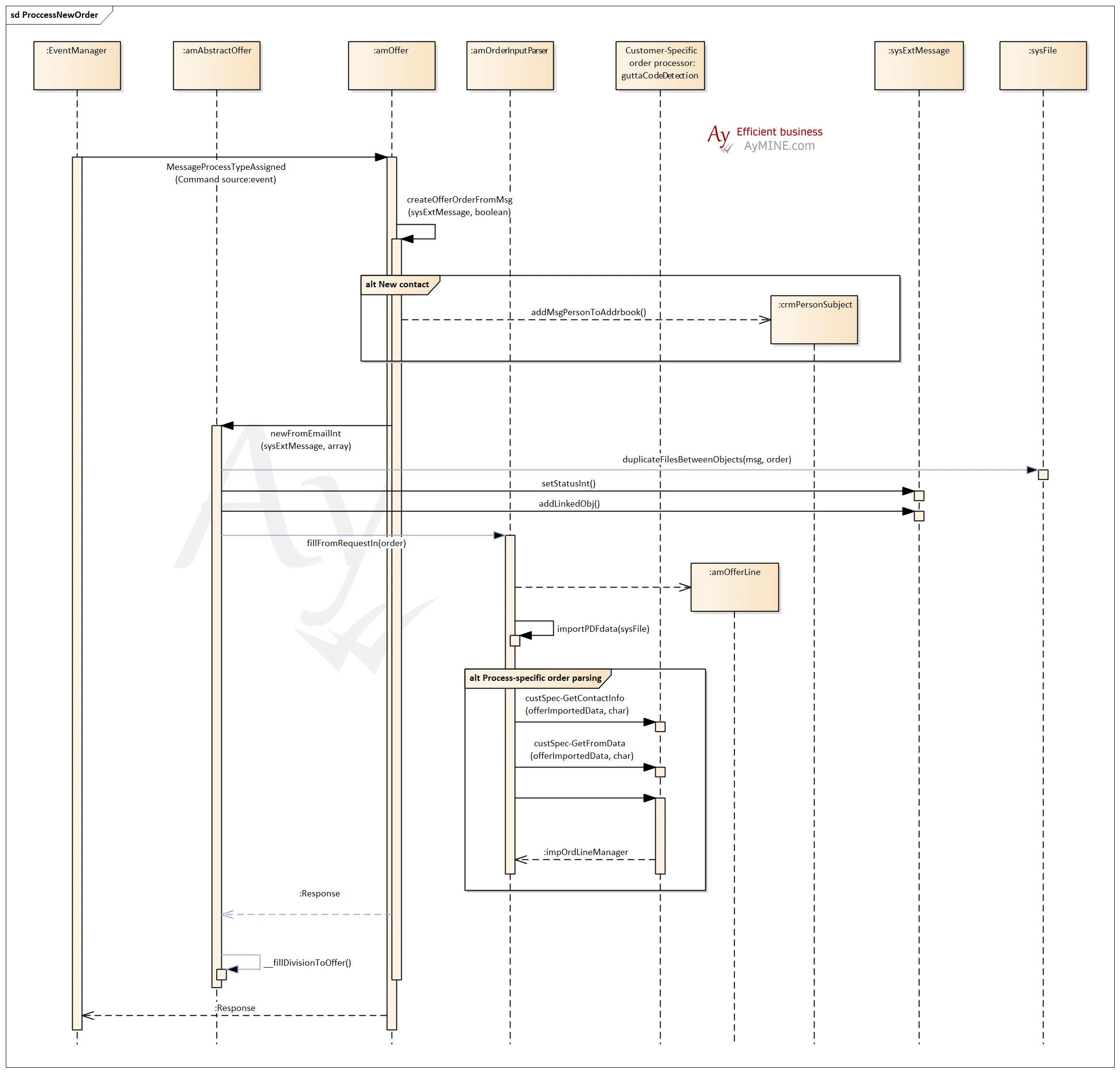
Creation of a new orders is made by several internal classes. The following collaboration scheme describes their orchestration: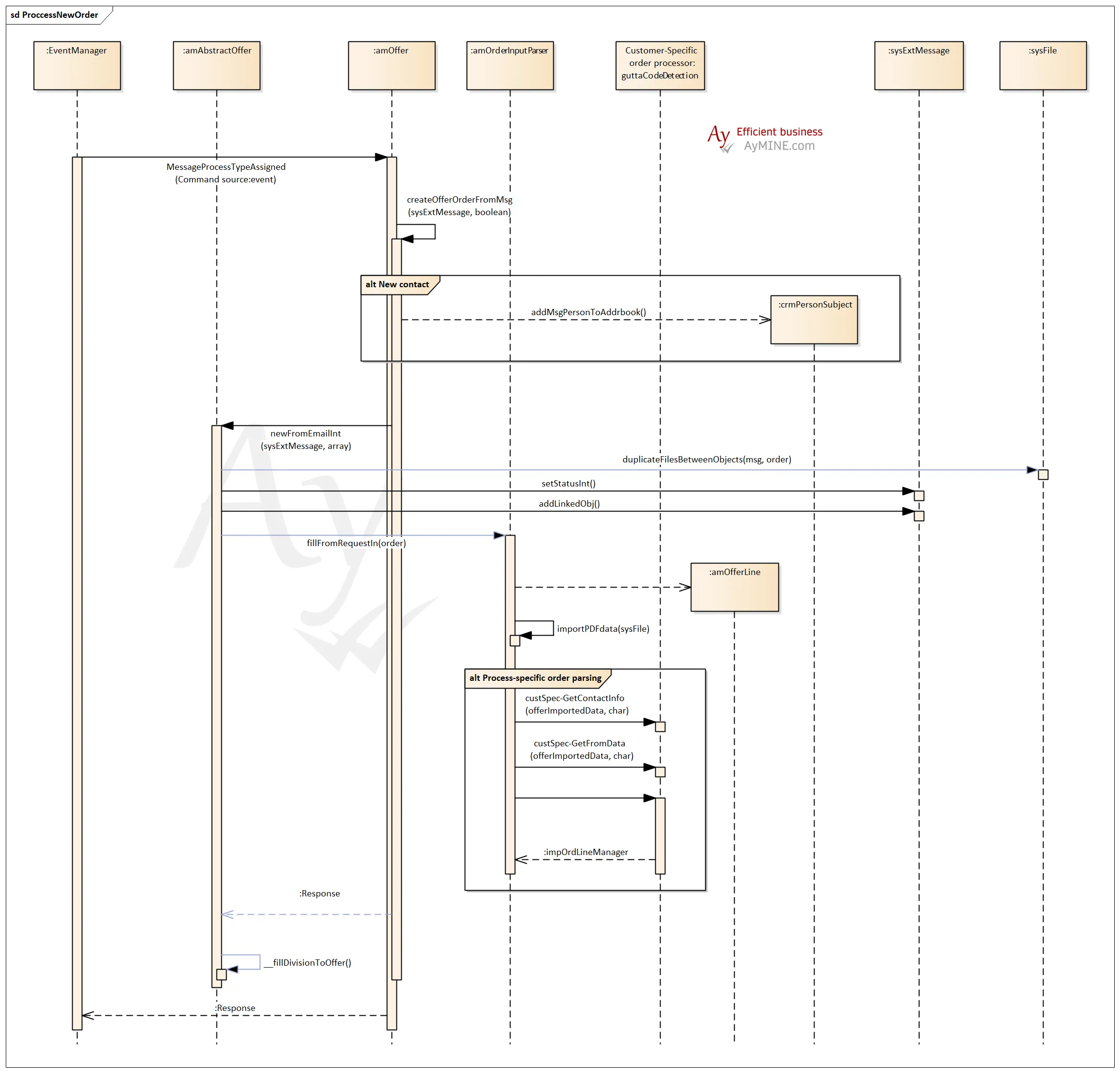
Link to picture detail